Installing a French drain is a relatively straightforward process, but it requires some time and effort to ensure it works effectively in redirecting water away from your property. Here’s a step-by-step guide to help you install a French drain:
Tools and Materials Needed:
- Shovel or trenching tool
- Gravel (3/4 inch washed gravel is ideal)
- Perforated pipe (preferably PVC)
- Non-woven Geo-textile Landscape fabric
- Hand Level
- String and stakes (optional, for guiding the trench)
- Pipe connectors (if needed)
- Backfill soil
Step-by-Step Guide:
- Plan the Drain Path
– Assess the Area: First, determine the problem area where water accumulates, such as near the foundation of your house, a soggy yard, or any other area where water needs to be diverted.
– Slope: A French drain works by gravity, so make sure the drain path slopes away from the area you want to drain. Ideally, the slope should be a minimum of 1% (1 foot of fall per 100 feet of drain).
– Mark the Path: Use stakes and string to mark where your trench will go. Ensure the path is sloping consistently downhill, and make adjustments as needed. - Dig the Trench
– Trench Depth and Width: The trench should be about 10 inches wide and 12-36 inches deep, depending on the size of the pipe you’re using and how much drainage you need.
– Digging: Use a shovel or trenching tool to dig the trench along your marked path. Check the slope periodically with a level to make sure the trench maintains a consistent downward angle. (Helpful hint: If you have good grass in the area you are going to trench, you can cut pieces of sod from the area first so that when you finish you can replace it for a cleaner look.) - Lay the Landscape Fabric
– Unroll Fabric: Lay a length of non-woven geo-textile landscape fabric along the bottom of the trench. This fabric helps prevent dirt from clogging the pipe and gravel. (Note, make sure that the fabric you use is permeable – many landscape fabrics available out there do not allow for water to pass through, which would defeat the purpose of your french drain system! Test the fabric first by holding the fabric horizontally and seeing how easily water drips through when poured on top.)
– Overlap Edges: If you’re using multiple lengths of fabric, overlap the seams by at least 12 inches to prevent soil from getting into the gravel and pipe. - Place the Perforated Pipe
– Lay Pipe: Place the perforated pipe at the bottom of the trench. The holes in the pipe should face “downward” or, rather at 8 and 4 o’clock. This allows the water to enter from the either side, while the bottom of the pipe carries water downhill. (Note, some people add a layer of gravel first, but our experience dictates that the lower the pipe, the faster water gets picked up and carried away.)
– Positioning: Ensure the pipe maintains the slope so water flows naturally down the trench. (Some people use a pipe with a sock (a fabric cover) to prevent dirt from clogging the holes, but our experience suggests that this sock can get in the way and that a better use of materials is to use a heavy-duty (3-5oz.) fabric around the entire trench (See step 3.) - Add More Gravel
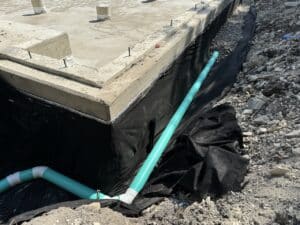
– Cover the Pipe: Once the pipe is in place, add gravel around and above it, filling the trench up to within a few inches of the ground level. This gravel layer should be at least 3-4 inches thick to help water flow into the pipe. (Note: If your objective is to pull water from the surface, the gravel should go almost to the surface as described above. However, if you are trying to prevent water from going down and around your foundation, your trench will sit much deeper and you will have 12-24″ inches of soil above the french drain.)
– Compact the Gravel: Lightly compact the gravel to ensure the trench does not settle down the road which would cause the surface to sink. - Wrap with Landscape Fabric
– Cover with Fabric: After filling with gravel, fold the landscape fabric over the top of the gravel to prevent soil from entering the drain system.
– Secure the Fabric: You can use small stakes or pins to hold the fabric in place. - Backfill the Trench
– Fill with Soil: Cover the fabric and gravel with the remaining soil you dug out from the trench. Leave a small mound above the ground level to account for settling. You can plant new grass or sod on top (or replace the grass cut and set to the side at the beginning) for a neat finish. - Test the Drain
– Check Flow: After installation, test your French drain by running water into the trench (or waiting for rain). Make sure the water flows freely and drains away from your home or the problem area. (Note: we recommend testing the slope BEFORE you cover up the pipe as well. Do this with a garden hose by adding water to the beginning of the system and then watch to see if water drains all the way to the end without filling up the pipe or causing water to spill out of the holes.)
Tips:
- If you’re draining water to a specific area (like a dry well or ditch), make sure the drainpipe leads to that point.
- A solid pipe (non-perforated) can be used at the outlet end if you want to ensure the water is directed away from the foundation or property.
- Consider using a pipe with a sock (a mesh covering) to prevent dirt from entering the pipe over time.
A properly installed French drain can significantly reduce water pooling and prevent foundation damage, making it a great investment for your home’s drainage system.
A French drain is a popular and effective drainage solution used to redirect excess water away from areas prone to flooding, moisture accumulation, or water damage. Essentially, it is a trench filled with gravel or rock, which contains a perforated pipe designed to capture and channel water away from a particular location. French drains are commonly used around foundations, in yards, and in areas where water management is crucial to prevent flooding or long-term damage to structures.
The primary purpose of a French drain is to manage surface water or groundwater by providing a path for water to flow away from areas where it may cause problems. When installed properly, it allows water to seep into the trench, pass through the gravel or rock, and enter the perforated pipe, which then carries it to a safer location, usually downhill or to a storm drain. This system prevents water from pooling around structures, reducing the risk of damage to foundations, landscaping, or other critical parts of the property.
One of the most common uses for a French drain is **preventing basement flooding**. Basements are particularly vulnerable to water infiltration, especially during heavy rain or snowmelt. In many cases, water seeps through the foundation walls or floor, leading to mold growth, structural damage, or the loss of personal belongings. Installing a French drain around the foundation can prevent water from building up around the basement walls, protecting the integrity of the home.
In addition to protecting foundations, French drains are also widely used to **improve yard drainage**. Poor drainage in a lawn or garden can create unsightly puddles, make the ground soggy and unusable, or even promote soil erosion. For example, low spots in a yard where water naturally collects can be mitigated with a French drain, ensuring that rainwater drains properly and doesn’t damage the landscaping. This is especially useful in areas with heavy rainfall, or where the soil composition or terrain prevents water from flowing away naturally.
Another significant benefit of a French drain is its ability to **protect foundations from water damage**. When water accumulates around a building’s foundation, it can weaken the structure over time. The soil around the foundation can become overly saturated, leading to erosion, cracking, or even shifting of the foundation. A French drain helps manage groundwater by redirecting it away from the foundation, minimizing the risk of costly damage and improving the overall stability of the building.
French drains are also highly effective for **stormwater management** in areas that experience intense rainfall. In locations where stormwater runoff is a concern, these drains help channel rainwater away from properties, roads, and other areas where it could cause flooding or erosion. By controlling the movement of excess water, French drains help prevent pooling and water damage to both private and public spaces.
To sum up, the French drain is a reliable and versatile drainage system that addresses water-related issues in both residential and commercial applications. Whether you are trying to prevent basement flooding, protect your foundation, improve yard drainage, or manage stormwater, installing a French drain can provide an effective and long-lasting solution to keep water under control.
Dealing with stagnant water in your yard due to heavy rain and inadequate grading is essential for averting potential flooding and water damage to your home. The installation of a French drain system emerges as a practical remedy to redirect water away from your home, securing its foundation and creating a more enjoyable outdoor environment for your family, pets and activities.
In its essence, a French drain entails the excavation of a trench in problematic sections of the yard. This trench is subsequently filled with a perforated pipe encased in water-permeable fabric and overlaid with stone or gravel. The operational efficacy of French drain systems hinges on gravity, guiding water down through the stones into the hollow pipe. This natural progression enables efficient water redirection towards a municipal drain (such as the street or alley), a rain barrel, or any other suitable drainage outlet.
The roots of the French drain trace back to 1859 when Henry French, a judge and farmer from Concord, Massachusetts, outlined the concept in his book. Initially crafted to drain excess water from crop fields, the system gained popularity for enhancing crop yield, diminishing yard saturation, and safeguarding housing foundations.
The foundational design of a French drain harnesses scientific principles to rapidly eliminate surplus water from specific locations. Gravity assumes a pivotal role in drawing water into the soil, and the drain provides an optimal route for water through a hollow, perforated pipe beneath layers of stone or gravel.
In instances of heavy rainstorms, water pooling around a home’s foundation can result in basement seepage due to inadequate drainage. The installation of a French drain surrounding the foundation efficiently diverts water into the hollow drainage pipe, leveraging water’s natural inclination to follow the path of least resistance.
The fundamental principle of a French drain is to present a path of least resistance for water, preventing soil accumulation and potential flooding. This is accomplished through a hollow, perforated drainage pipe that gathers and conveys water from the yard to a designated drainage point. The pipe is enveloped in water-permeable fabric to forestall debris from obstructing perforations, and it is enveloped in layers of stones or gravel. The substitution of soil with stones or gravel facilitates water flow, as the larger gaps in packed stone provide a more effortless route than densely packed soil.
Each constituent of a French drain is meticulously designed to facilitate the flow of water from the surface, through stones, perforations, and into the hollow drainage pipe. The pipe’s angle ensures immediate water flow away from the home, preventing water accumulation and potential flooding.
It is imperative to employ water-permeable fabric for wrapping the drainage pipe; otherwise, the drainage pipe’s effectiveness in channeling water may be compromised, perpetuating flooding issues.
Determining When to Opt for French Drain Systems:
Understanding the scenarios in which a French drain system proves beneficial is crucial before embarking on yard trenching. Common issues arising from heavy rain, excess groundwater, and melting ice or snow can be alleviated with the installation of a French drain system.
- Recurring Flooding and Foundation Damage:
- Weeping tiles or interior French drains act as protective measures against recurrent floods and prevent further damage to the foundation. Weeping tiles, a subtype of exterior French drain, alleviate hydrostatic pressure around the foundation by offering an alternative water path, circumventing foundation wall cracks. Interior French drains, on the other hand, collect seeping water and redirect it to an underground drain.
- Pooling Surface Water:
- French drains are effective in attracting water that accumulates in puddles or large pools on the surface. The drain draws water from saturated soil, providing a straightforward path for it to follow. The redirected water can be channeled to suitable drainage locations such as municipal wastewater drains or catch basins like rain barrels.
- Retaining Walls Under Pressure:
- To shield retaining walls from heightened pressure resulting from overly saturated soil during heavy rainfall, the installation of a French drain aids in drawing excess water and redirecting its flow away from the retaining wall, preserving the structure’s integrity.
Considering the Cost of French Drain Installation:
Before initiating the installation of a French drain, it is essential to account for material costs and potential expenses associated with professional installation. While proficient DIYers may undertake the task, many opt for professional installation to ensure efficacy and peace of mind. Professional installation often comes with warranties, addressing any issues with the French drain or potential damage to electrical or plumbing lines during installation.
The average professional installation cost of a French drain varies, with factors like the length of the drainage trench influencing material costs. Exterior French drains typically incur costs ranging from $40 to $50 per linear foot, while interior French drains, requiring specialized membranes and additional work, are priced at $80 to $100 per linear foot.
In conclusion, French drain systems emerge as holistic solutions to tackle water-related challenges, furnishing an efficient avenue for water redirection, safeguarding homes, and amplifying the functionality of outdoor spaces.

 A French drain’s performance depends on three things: how deep it is installed, where it is placed, and how the entire system is built.
 The best location for a French drain depends on where the water is coming from and how it reaches the area you want to protect.
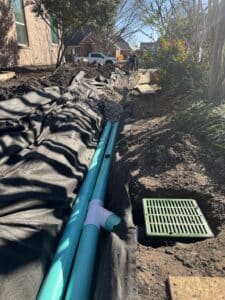 A French drain includes a collection trench, filter fabric, drainage rock, perforated pipe, and an outlet. These components need to work together.
 Consistent slope and a planned discharge point
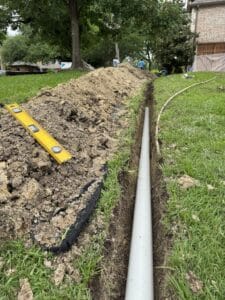 Consistent slope and a planned discharge point
 When comparing recommendations, ask: