— Experts Who Understand Water —

Basement Waterproofing and Drainage Systems
Basement Waterproofing Designed for Dallas Conditions
Waterproofing a basement in the Dallas area requires more than simply applying a waterproofing product to a concrete wall. Our expansive clay soils, caliche, bedrock, groundwater and hydrostatic pressure can create complex conditions around below-grade structures—and those conditions need to be considered as part of the complete water-management system.
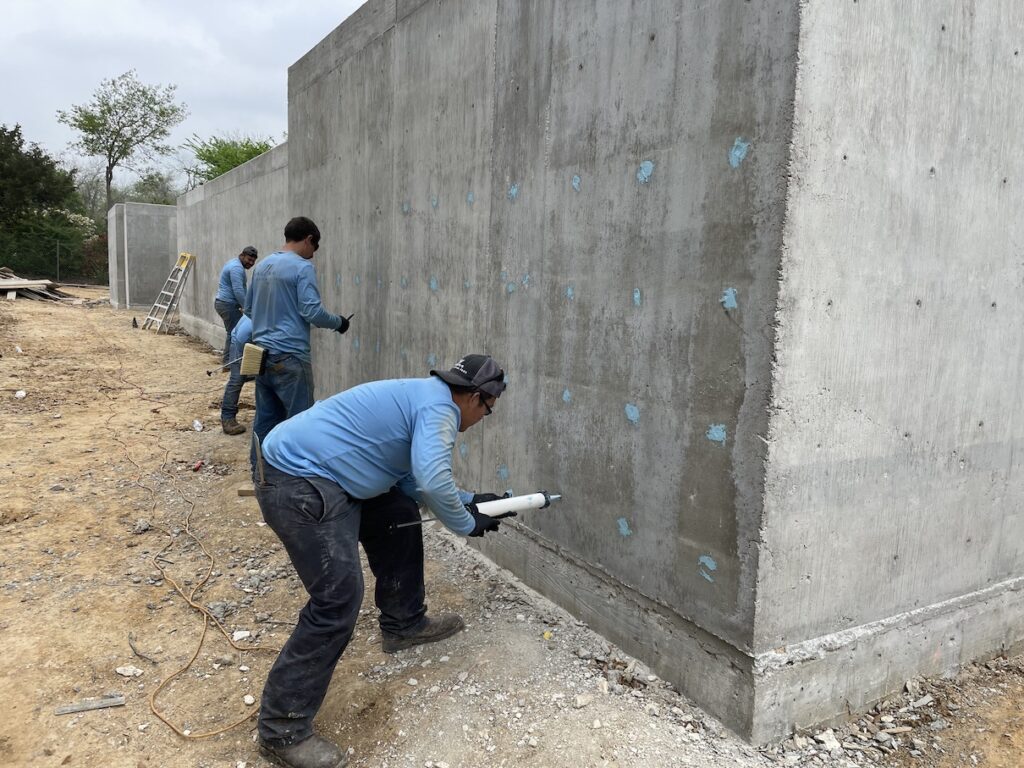
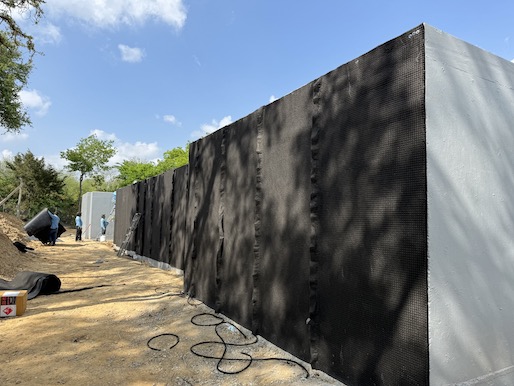
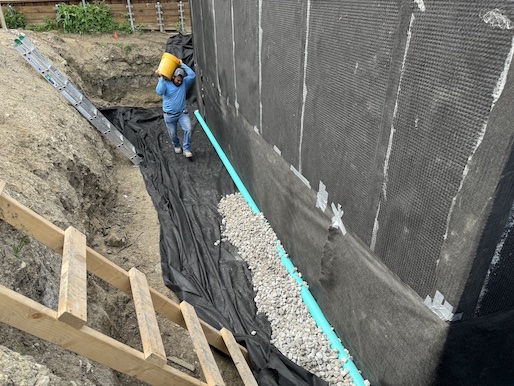
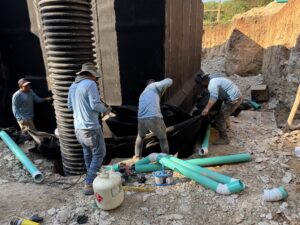
Waterproofing a basement is a very complex and involved process. In this video, we walk through the process we use to protect a an entirely below-grade, concrete basement, including applying an elastomeric membrane coating, installing a manufactured dimple board drainage mat, excavating very deep to construct perimeter French drain systems that intercept groundwater, and digging to install even deeper sump pumps to provide a reliable path for collected water to discharge away from the structure.
The result is a comprehensive, multi-layered approach designed specifically around the challenges of building below grade in North Texas.
When most of the system will eventually be buried and inaccessible, getting the details right before the basement is backfilled or the concrete is poured is critical.
A Dallas Drainage Pros core philosophy...
At Dallas Drainage Pros, while our approach to basement waterproofing is multi-phased and complex, it’s also practical. Our philosophy is grading first, drainage second, waterproofing third. While not installed in that order, our big-picture focus during a construction project is to think long-term. Rather than singularly focusing on the end goal (to have a dry basement), we prioritize the most obvious, yet often over-looked keys to keeping stormwater away from a structure: natural grading and gravity-fed surface drainage. Thinking this way allows for the layers of waterproofing to be the last lines of defense, not the first.
Waterproofing Systems Engineered, Desgned and Installed
When it comes to waterproofing as it relates to drainage, one of the structures that requires the most attention to detail is the basement. Even though basements are not common in north Texas, we do find them in certain areas, particularly in what is known as the “walk-out basement” where, due to the sloped topography of the land, a portion of the first floor is below grade, with the rest being level with the property. Basements or any type of below grade property require extra scrutiny because of the fallout that would happen if a substrate application failed. Technology has come a long way in recent years, as old methods were discovered to have broken down over time. Make sure that the waterproofing membrane you are getting is up to date and the best in its class!
Other applications which require waterproofing or sealing are when cracks develop in a concrete foundation beam or separation has occurred between joints, where water is seeping into a home or crawl space. Keep in mind, there are different types of cracks – some more complex than others. For example, if your pier and beam foundation is shifting, an existing crack could eventually become even larger, rendering a repair obsolete. These are things to be aware of, and worth the attention or input from others, such as a foundation repair expert.
Sealing a structure is a particularly challenging task, when the goal is to stop the world’s greatest solvent: Water. Waterproofing a structure or building is a complex process that involves the consideration of many factors:
What type of material is being sealed,
- What condition is that material in,
- Which side of the structure is accessible, etc.
Beyond that, it is also essential to be knowledgeable of:
- The ideal time (or temperature) to apply a waterproofing membrane,
- Which product to use (depending on what conditions it will be required to handle),
- The application process, which is absolutely critical in order for a waterproofing job to last the lifetime of the structure.
Waterproofing something correctly depends on the material being sealed, as well as the conditions in which it is being worked – there is no one size fits all approach to stopping water in its tracks (and having that barrier last.) Give us a call and let us evaluate your particular situation and develop a solution that protects your home for years to come.
Note: The above YouTube video of this particular basement waterproofing job raised a bit of debate regarding structural integrity and engineering. In response to this, we wrote an article that helps clarify some points made in the video, as well as to help educate on the different engineered basement designs out there. You can check this article out here:
Basement Foundation Structure Debate: What is best for Waterproofing and Drainage
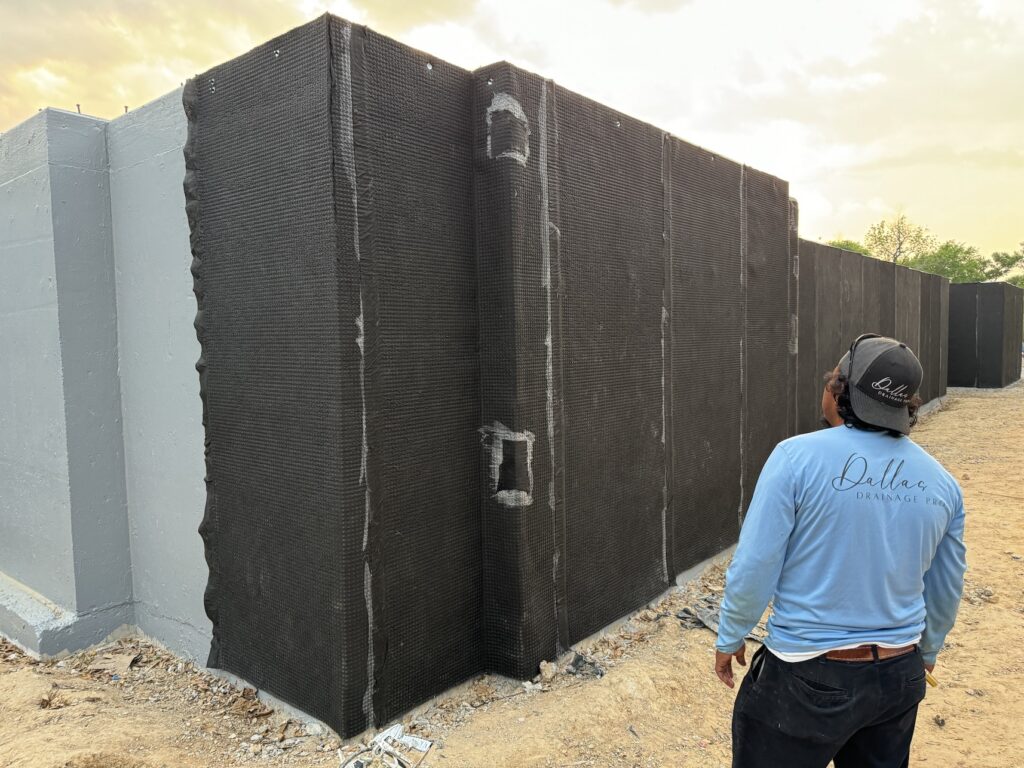
Basement Waterproofing Projects:
Dallas Drainage Pros is your best bet when it comes to something as critical as waterproofing your home. Our process is all about details, combining the latest in technology with the consistency of time-proven techniques.
Videos of Recent Jobs
When it comes to any underground walls, meticulous waterproofing is of utmost importance. We are often called to a home where improper or insufficient waterproofing measures were implemented during construction, and as a result there is water leaking into the home. Once the surrounding construction is in place, it is almost impossible (without spending a fortune) to redo it correctly. This is why having a knowledgeable company do such a critical step is so important.
We hope you enjoy these videos and others, and remember – drainage should be among the first considerations on any construction job, not at the end when the damage is already done.
Whatever your drainage problem, we’ve got you covered. We are local drainage professionals in the Dallas area, providing quality solutions to landscape drainage issues. Whether it is installing a French drain or sump pump, cleaning an existing system, or designing an erosion solution, we will leave you confident that your property will withstand the next Dallas downpour!

What type of material is being sealed,