Call or Text: (972) 269-5639

What Is Surface Drainage?
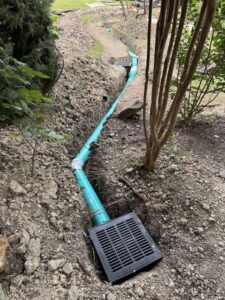 Surface drainage manages water that is flowing across the surface of your property, rather than groundwater moving through the soil below it. Common sources include:
- Rain falling directly onto the yard
- Roof runoff discharged through gutters and downspouts
- Water flowing from uphill areas
- Runoff from patios, driveways and other hard surfaces
- Low areas where rainwater naturally collects
Whenever possible, good grading should allow water to naturally flow away from the home.
But many Dallas-area properties don’t have enough elevation change to rely on grading alone. Other properties have isolated low spots, large roof areas or physical obstacles that make additional drainage necessary.
That’s where catch basins and downspout drainage systems come in.
Catch Basin Drains for Standing Water and Surface Runoff
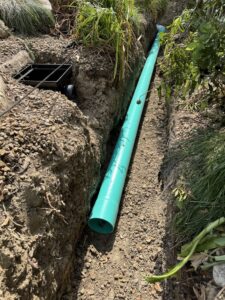 Catch basins serve a different purpose. Instead of collecting water from a downspout, a catch basin collects water flowing across the ground. These drains are commonly installed in low areas where water naturally accumulates, such as:
- Low spots in lawns
- Areas between homes
- Near patios and outdoor living spaces
- Landscape beds
- Courtyards
- Areas receiving runoff from hard surfaces
- Locations where grading cannot provide adequate natural drainage
Water enters through the grate at the top of the basin and is carried away through solid underground drainage pipe.
Catch Basins Have to Be Installed in the Right Place
A catch basin only works when water can reach it. This sounds obvious, but it is one of the most important principles of surface drainage design. Simply placing a drain in an area that gets wet doesn’t necessarily solve the problem. The surrounding elevations must direct water toward the drain.
That’s why we evaluate both drainage and grading when designing a surface water system. Sometimes the solution is a catch basin. Sometimes it’s regrading. Often it’s a combination of both.
Catch Basins vs. French Drains: What’s the Difference?
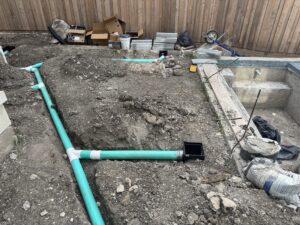 This is one of the most common areas of confusion in residential drainage. Catch basins and French drains are designed to address different types of water.
Catch Basins Collect Surface Water
If you can watch rainwater flowing across the yard and collecting in a low area, you’re dealing primarily with surface water. A catch basin or another surface drainage solution may be appropriate.
French Drains Intercept Water Within the Soil
A French drain is primarily intended to manage subsurface water moving through saturated soil. For example, groundwater migrating downhill toward a foundation may require a properly positioned French drain rather than a surface catch basin.
This distinction matters. Installing a French drain for a surface-water problem can add unnecessary cost and complexity. Installing a catch basin where the actual problem is groundwater may fail to address the source altogether. The right drainage system depends on where the water is coming from.
Do You Need Surface Drainage?
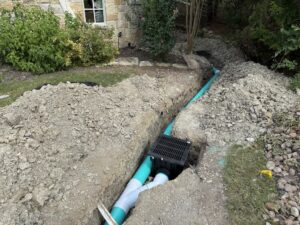 You may benefit from a professional drainage assessment if you’re experiencing:
- Standing water after rain
- Downspouts dumping beside the foundation
- Erosion below downspouts
- Water pooling between homes
- Water collecting near patios or outdoor living areas
- Runoff flowing toward the house
- Water entering a garage, crawlspace or home
- Existing surface drains that don’t seem to work
- A yard without an obvious gravity drainage path
The first step isn’t deciding which drain to install.
It’s identifying where the water comes from, how it moves through the property, and where it can safely go.
From there, we can determine whether the right solution involves grading, downspout drainage, catch basins, French drains, a sump system — or a combination of these approaches.
Dallas Surface & Yard Drainage Solutions
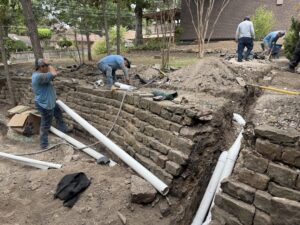 Dallas Drainage Pros designs and installs residential drainage systems throughout Dallas and surrounding DFW communities. Our drainage solutions include:
- Downspout drainage
- Catch basin and surface drains
- Yard drainage
- Grading and drainage correction
- French drains
- Footer-depth French drains
- Groundwater drainage
- Sump pump systems
- Drainage assessments
- New construction drainage planning
Not sure what type of drainage your property needs? Start with the water — not the drain.